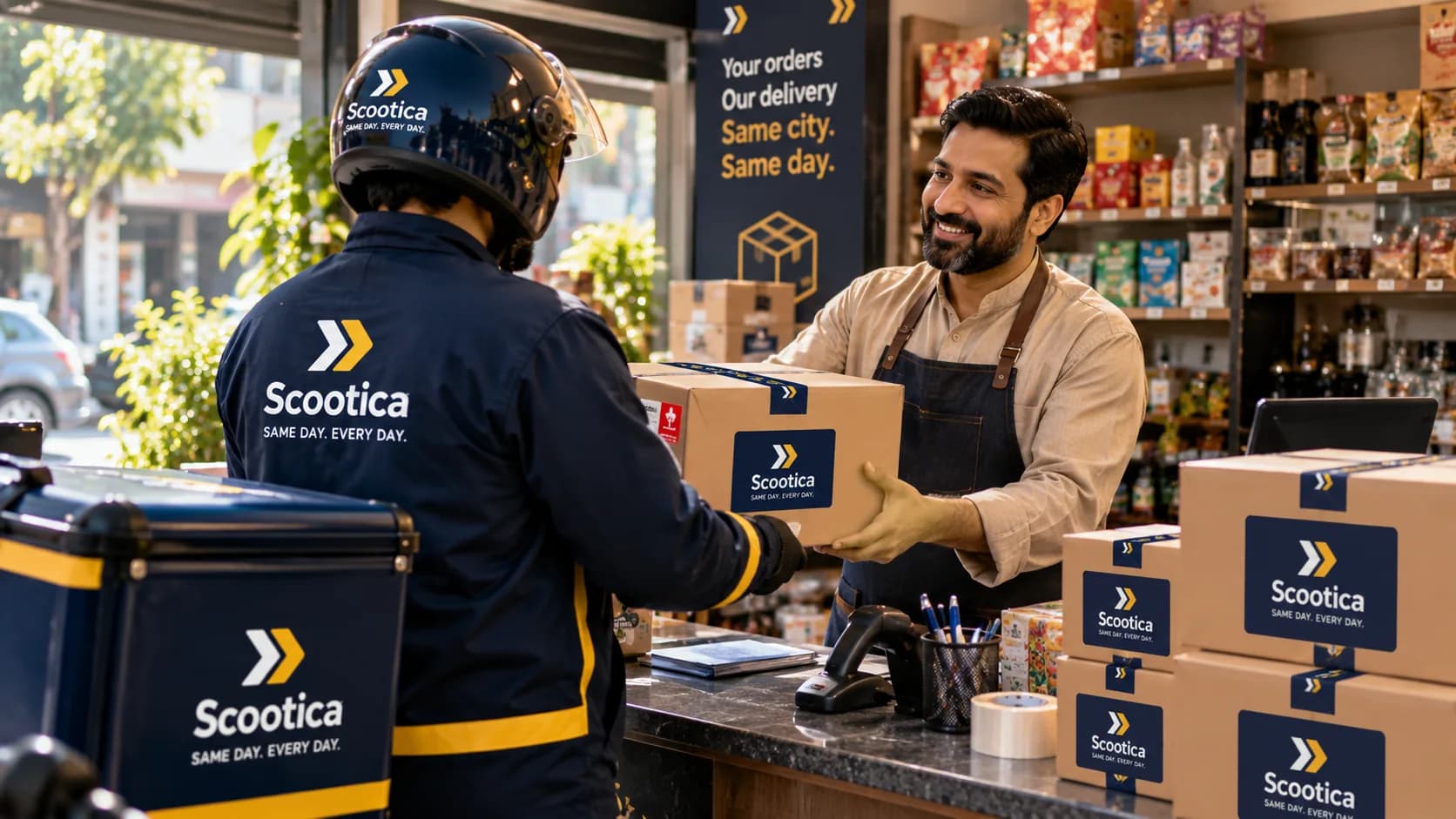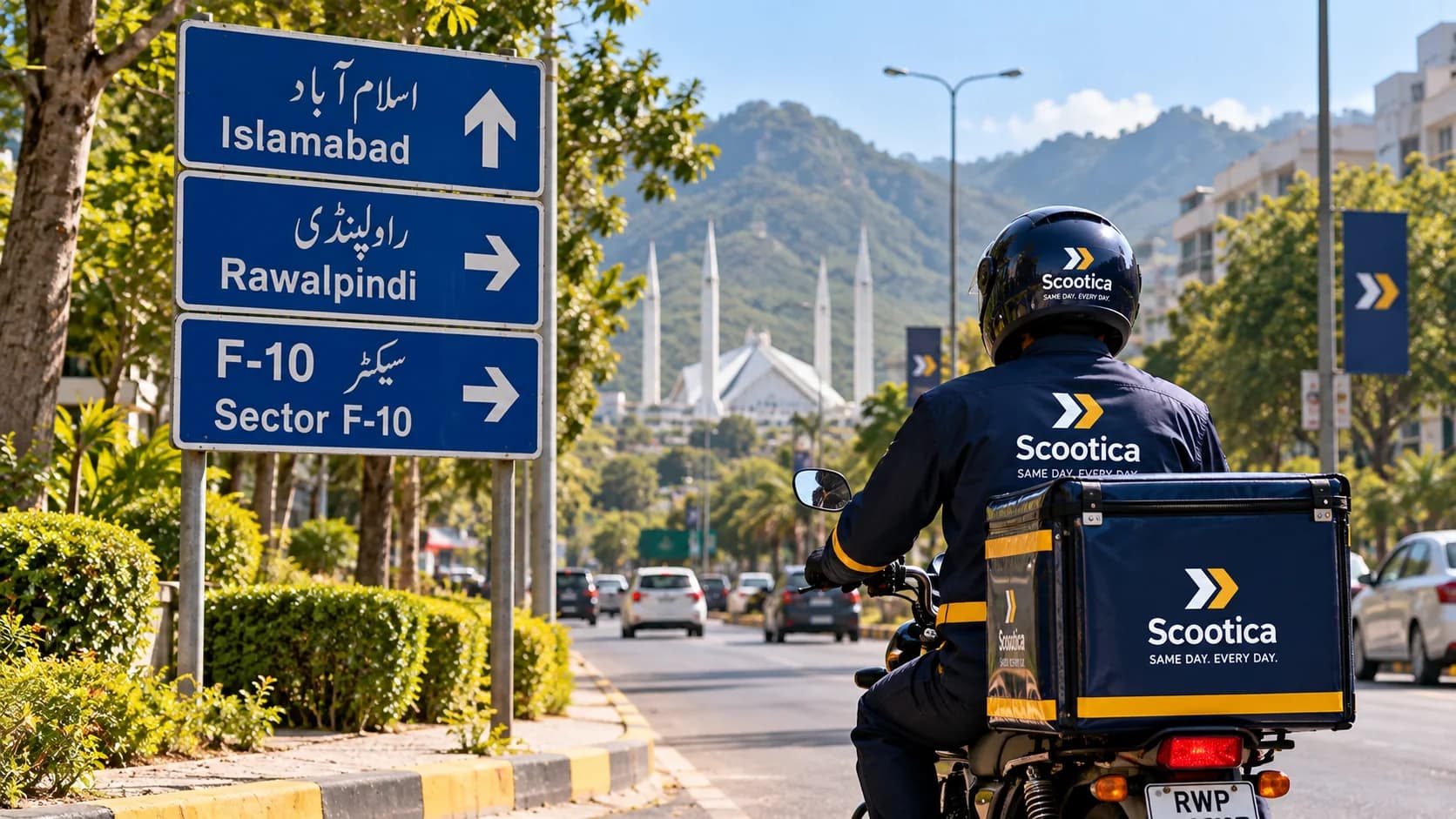
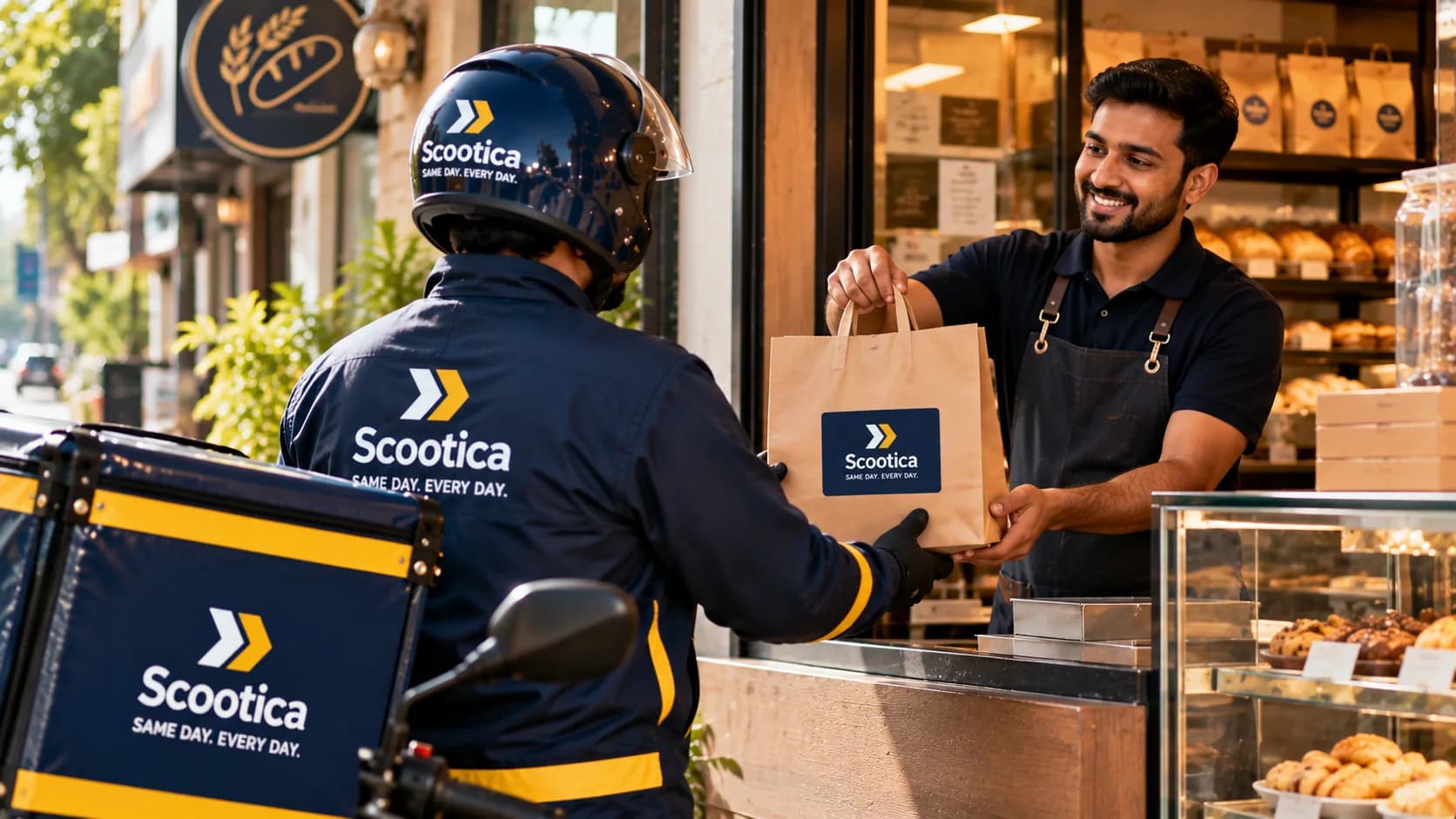
Almost every guide to shipping in Pakistan assumes you already qualify for a courier account. They compare corporate rate cards, minimum monthly volumes and pickup contracts. None of that is written for the person actually asking the question — the shop doing five orders a day from a phone and a back room.
This is that guide.
The three stages, honestly compared
Every small Pakistani seller passes through the same three stages. Most of the frustration comes from being in one stage and trying to operate like another.
| Stage | Works when | What it costs you |
|---|---|---|
| Walk-in counter | 1–3 orders a day, counter nearby | Your time. Two hours a day of queuing is a part-time job you are not being paid for. |
| Scheduled local pickup | 5–50 orders a day, one city | A per-parcel fee instead of your afternoon. This is the stage most sellers skip too long. |
| National courier account | Real volume, multiple cities, you meet their minimums | Volume commitments, sometimes a deposit, and you are one account among thousands. |
What couriers actually want before they open an account
It varies, but the pattern is consistent: a registered business identity, a minimum monthly parcel count, sometimes a security deposit, and a bank account in the business name for COD remittance. If you do not have those yet, that is not a failure — it just means a national account is the wrong tool this month.
Pickup versus drop-off, in hours and rupees
Run the comparison on your own numbers. For a five-order day in the twin cities it usually looks like this:
| You go to the counter | A rider comes to you | |
|---|---|---|
| Your time | 60–120 minutes | 5 minutes at the counter |
| Travel cost | Fuel or fare, both ways | Rs 0 |
| Shop unattended | Yes — and that is lost sales | No |
| Per-parcel fee | Lower on paper | Higher on paper |
| Real cost | Count your own hour at anything above Rs 200 and pickup wins at five orders a day. | |
Packing for a bike, not a truck
Twin-city last-mile runs on motorcycles. That changes what survives:
- Assume rain and dust. An inner polythene layer costs a few rupees and prevents a return.
- Assume vertical. Parcels travel in a box or a bag, not lying flat. Anything that can shift will.
- Tape the opening, not the middle. Most damage claims start at an edge that was never sealed.
- Write the address on the parcel as well as the label. Labels come off in the rain.
- Glass, liquid and cake need to be declared. A rider who knows will route differently.
Your order-to-dispatch routine, on one page
- Confirm every order before you pack it. One WhatsApp message. This is the single highest-return habit in the whole operation.
- Pack in one batch, once a day, before your pickup window.
- Write the amount to collect on the parcel if it is COD. Riders should never have to ask.
- Book your pickup window for after your packing batch, not during it.
- Reconcile at the end of the day — parcels out, parcels delivered, cash expected.
The confirmation message, in the words that work
Keep it short, name the amount, and ask a question that needs an answer:
A customer who typed YES rarely refuses at the door. A customer who read nothing is a coin toss.
When to graduate — and when not to
Move to a national courier when you genuinely ship outside your own city every day, or when your volume clears their minimums comfortably rather than barely. Do not move because the per-parcel rate card looks cheaper: a lower rate on a service that cannot collect from your counter at a time you choose is not cheaper once you price your own hours and your refusal rate honestly.